Wednesday, May 3, 2023

Response To The Film Good Will Hunting

 John C Gibson

Instructor Emma Peterson

Introduction To Sociology 

University Of Massachusetts, Lowell

22 April 2023

This film is about a series of conflicts -- within individual characters as well as between characters -- and many of those conflicts are related to class. Choose one or two of the major conflicts in the film and analyze the role of class in that conflict.

Response To The Film Good Will Hunting

Why start a film with the camera aimed at a Calculus (I) level equation on a chalkboard in a school about a janitor’s life story if it wasn’t to highlight the class conflict of a society? Conflict theory says that the actions taken by conflicting groups make the world tick. The action taken by the man in the class struggle of this film was doing math and reading books with high skills and proficiencies!

The arrogance of the main characters doesn’t seem consequential in the conflicted groups, though. The words “arrogance” and “arrogant” are never mentioned in the popular textbook Sociology Matters, while “proletariat” was mentioned 22 times (Shaefer, 2018). According to Karl Marx, proletariats work for large private enterprises with wealth inherited by the estate system. MIT and Harvard are large private enterprises personified by Skylar, who inherited her wealth precisely from the estate system; laborers are exploited under capitalism, and Willy, the main character, was one among the countless laborers. But laborers can have comparable intelligence to the large enterprises, and Willy’s math skills, on par with a math professor at MIT on certain math subjects, show it. Laborers are no less arrogant than capitalists, and Willy makes fun of the psychological therapists, crashing the therapy sessions to prove it. The capitalist setting was relevant for class grouping, though. The schools involved in the film are well-endowed, and the film would not make sense if filmed in a communist country. For example, the lead female character can not be portrayed as an attractive KGB female agent working to improve the mother country. Instead, the lead female character pays for Harvard tuition the average working-class citizen or public servant can not afford.  

The class grouping was not all about skin color or hair color contrasting either. The lead female character was a brunette, and her style, and color gamut, seemed compatible with the blonde man, Matt Damon, the character Willy, who was in the lower class stratum. Doing math and reading books was, again, the desirable lifestyle for both class groups. For an undergraduate student at Harvard, Skylar likely has an SAT math score of between 790 and 800. The course that Skylar was taking was organic chemistry, a practical job skill for dentists and doctors, and the screenplay says “learn” multiple times, “I have to learn this,” by Skylar with a typical British accent, which could have been voiced by a working-class British person. It appears that, in a conflict, both the higher and lower stratum are doing the same thing of doing math and reading books. Human natures are the same between the proletariats and the bourgeoisie. In the first psychotherapy session, the psychologist’s confidence in his own marriage was crushed by Willy’s insults about “married the wrong woman.” In the second psychotherapy session, where the scene was shot in a peaceful park in Boston, Willy’s lines became tamed, with softer words like “swan” and “garden”, compared to the first session with words like lifting “weights” and “285” ponds of hard iron and cold metal. Arrogance was fluid and can melt, depending on the scene and the setting, in either social stratum. In the second psychotherapy session, the psychologist quashed Willy’s arrogance with horrific Vietnam War stories while they sat on the park bench watching the swans.

 However inconsequential, the proletariats and bourgeoisies express their arrogance differently, even when doing the same things. Proletariats, represented by Ben Aflec’s character impersonating the math genius Willy, at a job interview for a code breaker, demanded “retainer” money from the interviewers. It was out in the open about money, with Ben Aflec’s hands open and palms visible to the public. That was not the case with bourgeoises’ dealing with money. Money was almost invisible to the public in the high-stratum society. For example, the well-paid MIT math professor describes his Fields Award as putting him down to become a “lowly” high-pay professor, trying to diffuse attention to his wealth, in a sarcastic tone. The arrogance expressed by the bourgeoisie was convoluted and sometimes hard to read. It can be a social problem, and the film singles out Unibomber Ted Kaczynski, a Caltech math professor, specifically an assistant professor who provided day-to-day teaching to young undergraduates. It was hard to imagine how Ted Kacynski imparted his thought process to his students. And, in MIT, the Field’s Medal was a point of contention, which the math professor and the psychotherapist argued but couldn’t reach any conclusion regarding a career path for Willy. 

According to Karl Marx, the capitalistic setting accentuates the contrast between the wealthy and the working-class groups. In the film, Willy’s abusive family was the scar of the old era passed down generations from the industrial revolution, specifically the textile industry of Massachusetts, which vanished. In contrast, Skylar’s family was expected to be kind and generous when Willy asked Skylar if her family will pay for the tuition for Stanford. Poverty gives family fertility, and Willy was expected to have twelve siblings. In contrast, Skylar was expected to be a single child, and the film never mentions any sibling of Skylar.

According to Karl Marx, the contrast between the wealthy and the poor would not last long, and a social movement would result in power redistribution. Wealth was the point of contention between Skylar and Willy that Willy could not bear when he said to Skylar that “I don’t love you,” out of arrogance and ego. But arrogance seems to be put aside finally in the last scene of the film when Willy decided to move to California. It was unclear in the film whether the family movement was substantiated. But, arrogance seems to be irrelevant in the end when it comes to family formation and family conflicts. It was not quashed or crushed, or melted down this time. Instead, it was just relented and let go…


Figure 1. The first scene, the first equation after the opening credit shots


Figure 2. Brunette Skylar with a masculine jaw.

Figure 3. The blonde main character.

Figure 4. Second psychotherapy session at a park in Boston 

Figure 5. Retainer money 

Figure 6. Lowly high-pay MIT professor

Works Cited

Conley, Dalton. You May Ask Yourself: An Introduction to Thinking Like a Sociologist. 7th ed., W. W. Norton and Company, 2021.

Schaefer, Richard. Sociology Matters. 7th ed., McGraw Hill, 2018.


Thursday, March 9, 2023

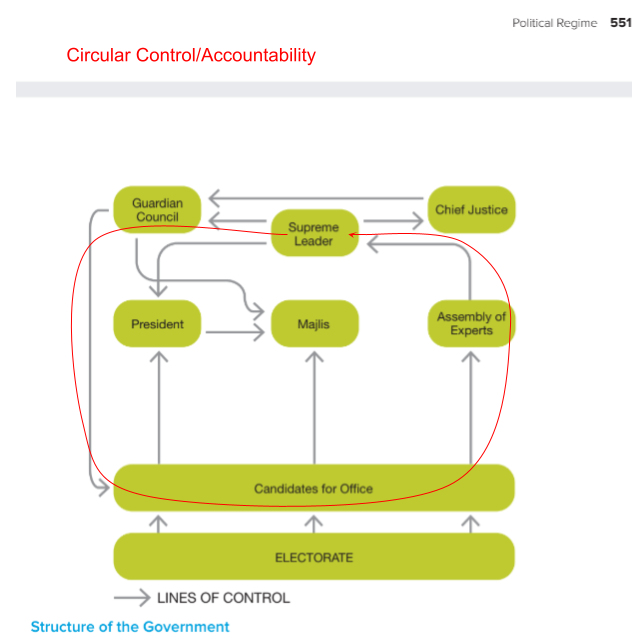
Iran Case Study

Official Name: Islamic Republic of Iran

History

Around the year 1000, the Vikings learned to read and write books, and they talked wrote about ethnicities in France (Burgundy), north of Rome Itay, all the way to Kyiv Ukraine, including Huns, Goths, and Scythians, shown in modern-day textbooks of Viking studies,


Their tales (in Volsung Saga) became Sleeping Beauty stories, and the ethnicities included Iran's ruling ethnicity of Qajar dynasty, the rich, brave, and famous Huns from 1700s to 1900s. 


Monday, February 20, 2023

The Viking American Construction Worker, GPA 3.92

 John C Gibson

Instructor Emma Peterson

Introduction To Sociology 

University Of Massachusetts, Lowell

16 February 2023


The Viking American Construction Worker, GPA 3.925

Abstract

This report discusses an atypical case from the common consensus of adult college students' challenging prospects, such as “Work/life obstacles” by Nancy J. Sweeney of Northeastern University, which categorizes “adult college students” as students aged 25 or older in undergraduate programs (Sweeney). The subject of this report is a male undergraduate student who withdrew from the university system in the first year twelve years ago. While calling himself a construction worker, the subject built a career working for two data center construction companies during his absence. As a sociological self-experimentation, the subject student was readmitted to the Kennedy College Of Science and resumed his bachelor’s degree program two years ago in 2021. Currently, the subject is a third-year student with over half the total credits completed for the degree requirement cumulative GPA of 3.925. 

Autobiography-Ethnography

It is much hard work/studying to get into the skin and stay in the skin of the working adult college students in the class. There is also a bit of distancing oneself from the formal self. As expected, most professors are much older than the students and conduct themselves excellently. The rare working adults, a mother or a father in the class, including the professor, are part of the “old people group” but are also in the “excellent group” led by the professor. Social grouping is essential in modern societies (Schaefer 79). Scoring high in exams in this group is an obligation, and avoiding the crowd, staying away from flu viruses, to preserve health for studying, is mandatory. Sometimes I forget that I am in an experiment set up by myself as a human lab hamster when the organic chemistry professor’s haunting somber expression shows the complexities of medicine synthesis and production. I have had nightmares a few times, with atomic particles crawling out of a fiery maze of molecules gnarling toward me. My calculations have wronged them, misplaced them, and I am responsible for their condemnation.

The more mature students pick up the grim faces readily and prepare for the exams accordingly because the signals socialize the “old people group.” The corporate-facing apprenticeship trained me to examine the professor’s words and expressions closely as if he were on trial in a court of law. That drive, power, may be part of famous sociologist Max Weber’s formulation for social stratification (Schaefer 133). The slightest grimace of the professor tells me whether a classmate solves an organic chemistry problem most efficiently. The speed in answering exam questions makes all the difference between scoring 60s and 90s because every student runs out of the last second of one-hour time in the organic chemistry exams. The non-verbal vocabulary that conveys information and its sociological force is powerful enough to make me study hard. Outside the “excellent group,” controlling the chemical particles and balancing electronic charges appears to be a geek's work and math equations tools geeks use to survive in the unpopular group. The class average for organic chemistry is 58 and 61 for this spring semester’s mid-term exams. 

Still, schools are more than vocational training places. As agents of socialization, professor Dalton Conley’s theory encourages schools to give “leeway” to youngsters to learn and make mistakes (Conley 129). According to labeling theories, some classes may instinctively pick out older students and label them “unfamiliar” and “different” (Schaefer 110). However the process goes, it builds an imaginary wall to protect first-time college students and give them room to practice social skills, for example, segregating group discussions by seating proximity, which first-time college students congregate during recess. A second kind of class treats every student as a trainee cadet indiscriminatingly. Most courses in the university system fall into the first category, some with paid peer tutors: undergraduate students who have completed the corresponding 2-semester course earn a minimum hourly wage given tutoring positions. The first day I was physically in a class was late in 2021 after the COVID-19 lockup between 2020 and 2021. As expected, it was a strange experiment and experience to be similar in age to general chemistry professor Dr. Farris on the first day of class in the Fall of 2021. She froze for half a second in shock when I entered the classroom and approached the front-row seats. I must be the oldest student she had ever seen in her classroom, and it took some mental processing to accept that I was not a school administrator. Then she smirked in solidarity, similar to the expression pictured here, acknowledging adults' difficulties when working with much younger people; a few are half our age. I entered the classroom just 10 seconds before the class started to avoid recess time and viruses when first-time students crowded. I tried to keep walking while checking my phone’s clock because I did not want others to bump into me, trip on the chairs with octopus legs, and draw attention to myself. I try to be as invisible as possible to other students that sometimes my tunnel vision only has the professor as the only object I can see. I miss out on the computerized attendance code on the periphery of the whiteboard corner of my tunnel vision a few times. 

However, there is a third kind of class where they stress finding the highest achieving, highest scoring student as if the entire university's reputation hangs on their class’s exam performance. One such class is Genetics, led by pre-med organization advisor Dr. Myers, where she announces the mid-term average score and the number of students that score perfect 100s after every exam. I don’t know any other professor that makes such announcements. For the 2022 Spring semester, I obtained two perfect 100s for both mid-terms. Again, every second of exam time mattered. The class’s average scores were in the 70s for the mid-terms. On the final exam day, as my usual routine, I entered the room 10 seconds before the start time. Dr. Myer greeted, with a strained voice, “Phew, there you are. I was wondering where you were.” 

That was the only time a professor was ever concerned about my whereabouts in my life. But that was far from the only novel experience I had. 

I learned during this experimentation that most “working adult” college students, including myself, may have an upper hand advantage of social stratification even though they may not realize it initially. According to Max Weber, a social stratum is not confined to a single characteristic, such as wealth or class (Schaefer 132). Instead, statuses and power are also at play (Schaefer 133). Employment is a status. A working nurse is in a higher position than a student with uncertain job prospects, even if the two are in the same classroom in a “big state university.” When I was a freshman in college twelve years ago, a B-grade student, I had always wondered what secret vocabulary the one working mother who attended web design class in the evenings had with the professor in the “old people group.” They conversed about the class material in a manner too detailed and yet too terse to understand by most other students. With muffled voices, working adults tried to protect their status as working professionals. Working professionals in the class lead role had experience solving problems in production environments that first-time students did not, their notions of web security holes overrunning with jargon in curtailing program bugs. Textbooks rarely study bugs, and sociologists say that lectures focusing on formality and academic rigor cannot capture the full extent of cultural capital (Schaefer 13).

One mystery remains. According to US government publications, the 6-year bachelor’s degree graduation rate is around 70 percent for large university systems, and the consensus of the age of an adult learner is 25 or older by private authors (Department Of Education, Sweeney). Where are the other 30 percent of students who should return to the classroom after they turn 25 or older, maybe 30-plus, assuming they first started around age 19?

Works Cited

Conley, Dalton. You May Ask Yourself: An Introduction to Thinking Like a Sociologist. 7th ed., W. W. Norton and Company, 2021.

Department Of Education. “Fast Facts: Undergraduate Graduation Rates.” National Center for Education Statistics, 31 May 2022, nces.ed.gov/FastFacts/display.asp?id=40. Accessed 21 Feb. 2023.

DeWeldon, Daniel. "Smirk." Http://Commons.Wikimedia.Org/Wiki/File:Retouch_Smirk_glasses_vip_1.Jpg, 17 Feb. 2011, commons.wikimedia.org/wiki/File:Retouch_Smirk_glasses_vip_1.jpg. Accessed 19 Feb. 2023.

Schaefer, Richard. Sociology Matters. 7th ed., McGraw Hill, 2018.

Sweeney, Nancy J. “Returning To College: An Exploration Of The Perceptions And  Experiences Of Adults As Undergraduates.” library.northeastern.edu, 21 May 2018, repository.library.northeastern.edu/files/neu:cj82sr534/fulltext.pdf. Accessed 17 Feb 2023.


Sunday, December 18, 2022

A Long Goodbye To The Bloatware Frienemy


Student: John C Gibson

Engineering And Ethics

Fall 2022 Section 205

Professor: Christopher Phillips, Ph.D.

Word count: 1035


How Is Bloatware Different From Viruses?

A Long Goodbye To The Bloatware Frienemy 

I argue against giving bloatware, pre-installed software, a lifeline to survive in misery in a world that increasingly utilizes online applications that don’t need installation in the first place. I prescribe mercy killing the bloatware. A few trade names are omitted in this essay to avoid defamation.

Recently, particular desktop operating systems have included a self-upgrading campaign in the operating system's desktop screen that asks the user to consent to the upgrade to a newer version of the operating system. The campaign features tactics of a gray, obscured button for the “No” option and changing intervals of presenting the consent screen interlaced with antivirus software advertisements. An operating system upgrade historically can introduce incompatibility of applications, giving the operating system company’s applications a competitive edge. In the old days, OS companies paid hefty fines to settle suits with bloatware blatantly defying court orders with Internet browsers that were nearly impossible to uninstall. But recent advancements in intricate programming techniques can give any application more subtle tactics in coercing and deceiving the user into giving consent to different matters. Sophisticated programs implemented in contempt of court orders may be difficult to prove because the boundaries between coercion, deception, and marketing advertisements can be hard to locate inside an intricate web of parameters. 

The progressive trend of moral standards gives an ever-expanding inclusion of a circle of personhood and more rights to more subjects and objects, as reported in Vox's article (Samuel, 2019). A progressive view can personify or anthropomorphize desktop computers in different ways. It can be a good marketing strategy to promote a product by asking people to respect the product like a natural person with the right to survive, access to nutrients, and all needed resources as much as possible. After all, desktop computers are natural secretaries to their owners with calendars and daily planner apps. The sophisticated CPU scheduling system slows down CPU clocking during slower hours to save electricity, emulating the fluctuation of human cardiopulmonary performance throughout the day. And computer engineering can utilize anthropomorphization, too.

A modern desktop computer goes into hibernation and reboots at night after office hours to refresh its security upgrades, similar to human sleep, consolidating memory. It is not hard to reason why a manager in the desktop computer building business likes to promote the industry with the agenda of a well-upgraded, well-updated computer with a fresh and healthy mind to assist the owners, for example, at the kitchen counter with an interactive cookbook. The competitor of the kitchen counter Amazon Alexa has a humanoid voice; a desktop computer has a touchscreen allowing flipping book pages in stunning, life-like 3D renders, just like genuine human assistance. As a thought experiment, to achieve the stardom of Alexa, a desperate operating system company may coerce the user to consent to allow the operating system to instill a more famous humanoid voice than Alexa and exclude third-party text-speech software to prevent fragmentation. Bloatware can include a golf tournament show channel with the cookbook while the oven timer is ticking instead of Alexa’s voice-only functionalities. And the desktop computer may just become a great contender to the Alexa voice assistance appliance without the market knowing the stealth change. However, the online application trend diminishes the operating system’s role in a computer's functionality, and a voice-enabled, 3D multimedia assistant is just one click away within any browser. 

But the online-only application trend is not the only challenge bloatware and deceptive coercion face. The virtualization of desktop computer operating systems enables sharing of computers managed by expert desktop computer engineers. Increasingly, viruses need to get through the expert’s configuration of a desktop computer in fortified secure environments. The penetration rate of viruses might have declined with the virtualization trend. And experts can disable operating system self-upgrading campaigns that are nearly impossible to accomplish for average users. Expert configuration can happen in the virtual desktop setting or a physical, professionally managed setup.

Still, there can be traditional, retail desktop computers in certain circumstances. The work ethic of the managers is to be loyal to their employees and shareholders. Indoctrinating and educating consumers to build loyal customers for the parent company is a moral obligation. Education in schools often involves math techniques in ideal conditions, for example, calculating parabolic curves of throwing a ball without considering air resistance or a ball’s deflection with force. Education sometimes involves deception, putting pupils in an ivory tower or a religious atmosphere, and indoctrinating elite leaders’ national interests. And, in such a mindset, consumers need to be coerced and deceived. When an operating system company is fined an astronomical sum for contempt of court, the manager might receive a bonus for their loyal service. But are managers responsible for deception tactics enjoying their success and fame? Mac OS and Apple computers are relatively virus-free because Mac OS has a relatively small market share, and the virus economy depends on the sheer quantity of attacks to achieve penetration. When the penetration payoff of a virus is too low, the virus ceases to exist. When the market share of traditional, retail desktop computers shrinks, bloatware’s profit can become too low for the bloatware to be a viable business. And when businesses go out of business, layoffs follow.

But the average onlookers of the saga may not be so determined about letting bloatware die off. Sympathizers of the bloatware industry may argue that bloatware is very different from viruses. The bloatware industry can be a legitimate entry point job for novice engineers. The elite people of western societies have dominated all other people and natural resources for centuries, and progress toward equality and equity is slow. Why be so uptight about consent and giving autonomy? Keeping an open mind and allowing software bots and new engineers to enter our world can bring changes. But, the future of the virus or bloatware economy is uncertain if virtualization, browser-only appliance, and online applications continue expansion. If the managers of the bloatware business were new engineers we tried to save when they were younger, when the market trend goes down, it appears they will be victims who need sympathy to save again.

Works Cited

Samuel, Sigal. “Moral Circle Expansion: Should Animals, Plants, and Robots Have the Same Rights as Humans?” Vox, 4 Apr. 2019, www.vox.com/future-perfect/2019/4/4/18285986/robot-animal-nature-expanding-moral-circle-peter-singer.